On-Track for Precision: Portable Milling Solutions for On-Site Modifications
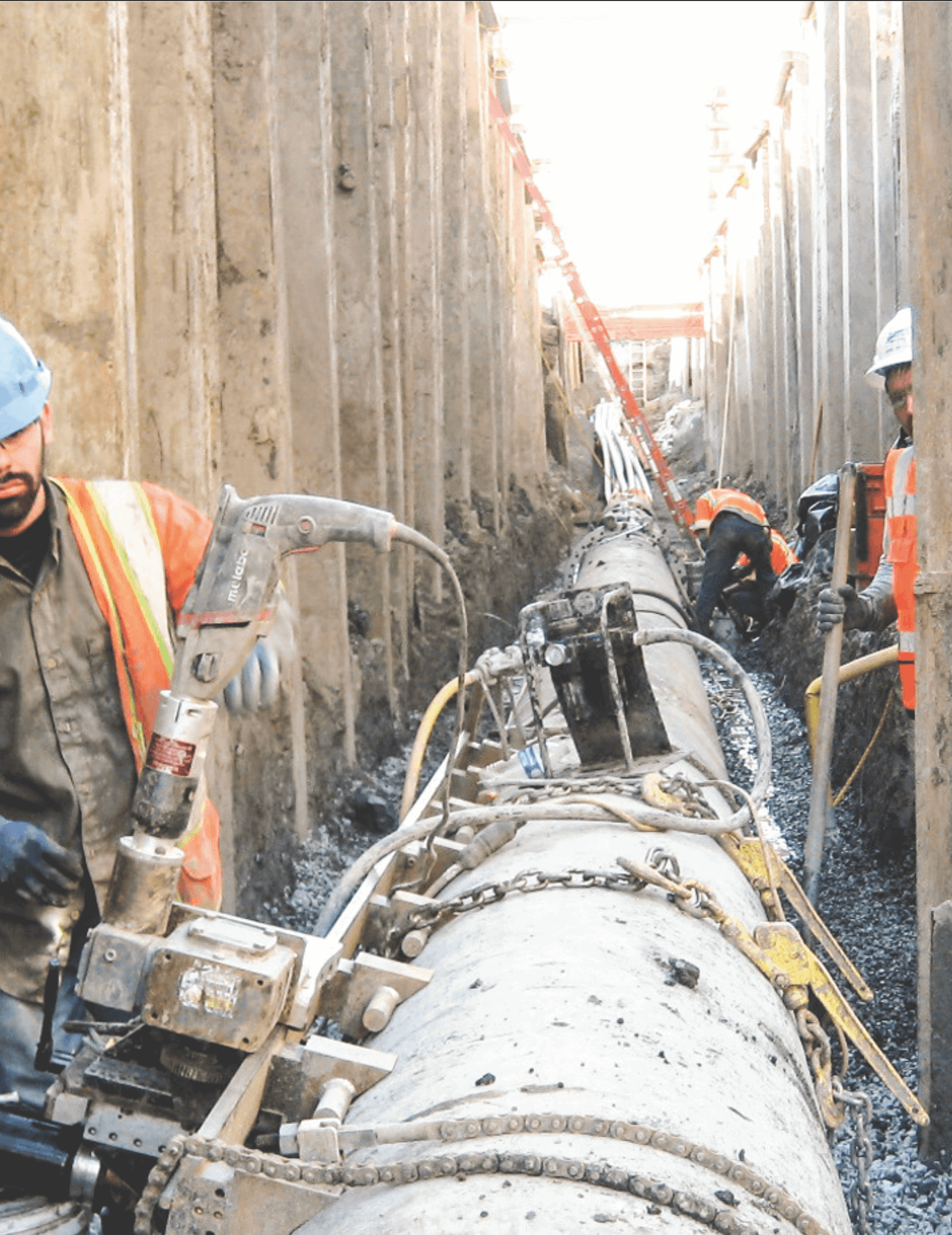
On-Track for Precision: Portable Milling Solutions for On-Site Modifications
Field machining rarely begins with ideal conditions
In the field, precision work rarely happens under perfect circumstances.
More often, teams arrive on site facing oversized vessels, curved shells, vertical surfaces, and shutdown windows that leave no room for trial and error. When a component must be modified in place, whether cutting an access window, milling a flat surface, or correcting distortion, removal to a machine shop is often impractical or impossible.
This is especially critical in power generation, oil and gas, and heavy industrial environments where large components cannot be easily removed from service. In these situations, purpose-built portable machining systems fundamentally change what teams can accomplish in real-world environments.
Instead of forcing the workpiece to the machine, modern field machining brings controlled, repeatable precision directly to the jobsite.
Why on-site milling presents unique challenges
In a controlled machine shop, precision depends on three things: stability, access, and environmental control. In the field, all three variables are compromised.
Field machining teams routinely encounter:
-
Large-diameter or irregularly shaped components
-
Vertical, horizontal, or overhead cutting positions
-
Restricted clearance from surrounding equipment
-
Aggressive outage timelines tied to production uptime
Because of these constraints, grinding is often used as a workaround. But grinding introduces variability, increases operator fatigue, and makes it extremely difficult to achieve repeatable, weld-ready surfaces.For critical infrastructure, that margin of error is unacceptable.
Facilities need a solution that preserves accuracy even when the environment does not cooperate.
What makes portable milling different from shop milling
Portable milling does not attempt to recreate a shop environment in the field. Instead, it adapts precision machining to the realities technicians actually face.
Track-mounted milling systems use segmented, configurable rails that mount directly to the workpiece. This allows the machine to conform to the component rather than forcing the component to fit a fixed machine envelope.
This design enables technicians to:
-
Mill flat surfaces on curved or vertical shells
-
Cut precise access windows in thick-walled vessels
- Maintain tight tolerances without equipment removal
- Work safely in constrained or elevated positions
Because the process is cold cutting, it avoids heat-affected zones, reduces spark risk, and preserves the material’s metallurgical integrity. The result is a safer, more controlled alternative to thermal cutting or hand grinding.
Cutting access windows without sacrificing control
A common outage scenario highlights the real-world value of track-mounted milling.
During a planned shutdown, a feedwater heater requires internal inspection. The vessel is too large to remove, and manual grinding would be slow, inconsistent, and difficult to control. Using a configurable portable milling system, technicians mount the segmented track directly to the vessel shell and guide the milling head along a controlled tool path. The result is a clean, accurately machined access window produced with predictable geometry.
This approach preserves structural integrity, minimizes rework, and helps teams stay aligned with planned outage timelines.
Accuracy matters beyond the cut itself
Portable milling precision does more than produce a clean surface. It directly impacts every downstream step.
When surfaces are machined correctly the first time, teams benefit from:
-
Improved fit-up of replacement components
-
Consistent weld preparation surfaces
-
Reduced risk of leaks or alignment issues
-
Faster inspection approvals
-
Shorter overall outage duration
In high-consequence environments such as power generation, refining, and heavy industrial processing, small geometric errors can cascade into major delays.
Portable milling helps eliminate that uncertainty.
When portable milling becomes a strategic advantage
Historically, some facilities viewed portable milling primarily as a reactive repair tool. That mindset is evolving. Many forward-looking reliability teams now deploy portable milling proactively during planned outages, equipment upgrades, and installation corrections.
Instead of working around equipment limitations, teams use precision field machining to prepare vessels for future access, correct fabrication inconsistencies discovered during installation, and modify legacy equipment to meet new operational requirements. This shift reflects a broader industry reality: field machining is no longer just about fixing problems, it is about enabling smarter, more flexible asset management.
Extending shop-quality precision into the field
Portable milling does not replace the machine shop. It extends its reach to places where traditional machining cannot go.
For organizations responsible for uptime, safety, and operational certainty, modern track-mounted milling delivers:
-
Predictable, repeatable accuracy
-
Faster turnaround without removal or transport
-
Safer cutting in complex environments
-
Greater confidence in downstream work
When the jobsite demands precision under pressure, portable milling keeps critical projects moving forward without compromise.
FAQs: Portable Milling for Field Modifications
What is portable milling used for in the field?
Portable milling is commonly used to cut access windows, machine flat surfaces, correct distortion, and prepare weld-ready surfaces on large or fixed industrial equipment.
How is track-mounted milling more accurate than grinding?
Track milling follows a guided tool path, producing consistent geometry and surface finish. Grinding is manual and introduces variability that can affect fit-up and sealing performance.
Can portable milling be performed on vertical or curved surfaces?
Yes. Segmented track systems mount directly to curved shells and vertical surfaces, allowing accurate machining in orientations that would be difficult in a traditional shop.
Is portable milling considered a cold-cutting process?
Yes. Portable milling removes material mechanically without creating a heat-affected zone, reducing metallurgical risk and improving safety.
When should facilities consider portable milling proactively?
Many organizations use portable milling during planned outages, equipment upgrades, or installation corrections to prevent future failures and reduce unplanned downtime.
What's your next mission?
Our staff and engineers are on the ready. Let Tri Tool get to work.